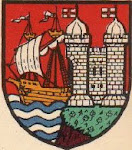
Our courses cover the broad span of military from those beginning their experience in the field of Mars through to the experienced practitioner who wish to learn new skills or to sharpen existing ones.
Typically most courses are run once every three months lasting from one week to three months, The syllabus is construct so that courses follow a gradually progression through the military arts
Here is a sample of courses:
Basic Military Skills for Gentlemen - learn all the appropriate terms used in the profession so you know the difference between a bastard and a bastion.
Basic Command Skills - how to command an infantry company through all the various tactical evolutions (nicknamed by students "how to get the troops to perform without paying the sargeant")
Generalship course - suitable for aspiring generals or heirs-apparent - covers the politico/strategic factors involved in leading nations or
Amphibious Landings - a short one week course examining the perils of landing on a hostile shore (and enemies might be present as well) - General Deloup usually particpates and relates his own personal experience in these operations in the new world.
Our director of studies is the renowned Herr Dr Griffin O'Patrick.
One to one tutition or locally organised course can be provided as required, although in general students gain considerably from sharing ideas with students from other backgrounds.
The Kriegsacademie has a wide range of facilities and bed-linen is changed at least once a week. The academie is supported in its training by units of the Frundsberg army and various generals for whom the Frei Stadt acts as agent.
We also have at outreach programme organised by Frau Verkehr that will teach students the necessary social skills that they may be lacking.
Showing posts with label Overview. Show all posts
Showing posts with label Overview. Show all posts
Monday, 17 September 2007

Frundsberg standing regiments
The Frei Stadt maintains a small standing army that acts as both the local defense force but also to provide the cadres for the regiments loaned to other powers. The loaned regiments are named after their colonel whereas the standing regiments are named by location.
The three standing infantry regiments are named after the major cities of the Frei Stadt where the regiments also have their barracks these are Pappenheim, Sonnenbad and Welle. The coat for all units is basically yellow lined red (turnbacks, collars, etc.) with the seniority and regimental distinction shown by the cuff colour: 1st Pappenheim - red; 2nd Sonnenbad - blue; 3rd Welle - green.
The two horse regiments are quartered in various small towns and villages across the Frei Stadt with the Stocwold regiment in the north and the Pidnem regiment in the south. A Stocwold squadron is quartered in Pappenheim and a Pidnem squadron in Sonnenbad. Uniform colours and facings are similar to the infantry with the Stocwold regiment having red cuffs and the Pidnem with blue.
The artillery corps is based in Pappenheim and a battery is outposted in Sonnenbad, Their uniform is yellow coats lined red with black cuffs for the gunners and grey for the artillery train.
Note: usually when units are loaned to other powers they are uniformed in order of seniority, so Yellow coats lined and faced red is the most commonly seen Frundsberg uniform.
The three standing infantry regiments are named after the major cities of the Frei Stadt where the regiments also have their barracks these are Pappenheim, Sonnenbad and Welle. The coat for all units is basically yellow lined red (turnbacks, collars, etc.) with the seniority and regimental distinction shown by the cuff colour: 1st Pappenheim - red; 2nd Sonnenbad - blue; 3rd Welle - green.
The two horse regiments are quartered in various small towns and villages across the Frei Stadt with the Stocwold regiment in the north and the Pidnem regiment in the south. A Stocwold squadron is quartered in Pappenheim and a Pidnem squadron in Sonnenbad. Uniform colours and facings are similar to the infantry with the Stocwold regiment having red cuffs and the Pidnem with blue.
The artillery corps is based in Pappenheim and a battery is outposted in Sonnenbad, Their uniform is yellow coats lined red with black cuffs for the gunners and grey for the artillery train.
Note: usually when units are loaned to other powers they are uniformed in order of seniority, so Yellow coats lined and faced red is the most commonly seen Frundsberg uniform.
Frundsberg details (2)
For those of you who have yet to enjoy the amenities of the Frundsberg Frei Stadt, here is a short description.
The country borders the east bank of the Rhine and from north to south is split into four regions: the Stocwold hills; Flussweih river valley; Pidnem hills and the Sommerland. The Flussweih flows east to west into the Rhine and on it are situated the two main cities, Sonnenbad and Pappenheim.
Pappenheim is the main port and commercial centre of the stadt, with extensive manufacturing facilities. Sonnenbad is the cultural centre where many people from all over the empire and beyond come to take the healing waters and socialise.
The southern slopes of the Stocwold and Pidnem hills are renowned as fruit growing areas and their beverages are well known. In the Pidnem hills are many mineral deposits and also substantial coal deposits. The famous Rachedd valley has given its name to the renowned local cheese.
The Sommerland was originally swampland but years of toil have drained it and turned it into the most fertile areas of the Stadt.
To the north is the Electorate of Glowstein, south the Duchy of Pommaine and to the east the Landgravate of Ishirwelt.
But your main interest is probably not our geography, the Frei Stadt has a reputation for providing high quality military services. These comprise:
The country borders the east bank of the Rhine and from north to south is split into four regions: the Stocwold hills; Flussweih river valley; Pidnem hills and the Sommerland. The Flussweih flows east to west into the Rhine and on it are situated the two main cities, Sonnenbad and Pappenheim.
Pappenheim is the main port and commercial centre of the stadt, with extensive manufacturing facilities. Sonnenbad is the cultural centre where many people from all over the empire and beyond come to take the healing waters and socialise.
The southern slopes of the Stocwold and Pidnem hills are renowned as fruit growing areas and their beverages are well known. In the Pidnem hills are many mineral deposits and also substantial coal deposits. The famous Rachedd valley has given its name to the renowned local cheese.
The Sommerland was originally swampland but years of toil have drained it and turned it into the most fertile areas of the Stadt.
To the north is the Electorate of Glowstein, south the Duchy of Pommaine and to the east the Landgravate of Ishirwelt.
But your main interest is probably not our geography, the Frei Stadt has a reputation for providing high quality military services. These comprise:
- Provision of all types of military equipment, in particular the foundries of Pappenheim produce a range of cannons, muskets and rifles.
- Hard wearing uniforms produced from the wool from the sheep of the Stocwold and Pidnem hills
- Overlooking Sonnenbad is the world famous Kriegsacamedie, where officers can attend various courses to improve their military art. link
- The Stadt can also provide high professional military units for hire and also acts as agents for a number of generals . (separate posts to follow)
Sunday, 17 June 2007
Frundsberg - details (1)
Although a fictitious state, I gradually filled up the history of Frundsberg.
Frundsberg was originally associated with the Hanseatic states and was an Imperial free town. It's prosperity was based on trade and manufacturing. Once the Frei Stadt was established the council of elected ministers acted as it's government. However the system of government was unusual as the number of votes per person was based an individuals payments to the Frei Stadt. Income for the Frei Stadt was derived from two main sources, tolls on goods and services provided by the city and the contributions by merchants and nobles.
Frundsberg is located on the banks of the river Rhine with good access to the sea and also into Central Europe and positioned on a natural communications hub.
During the TYW Frundsberg and its surroundings were spared the deprivations of much of Germany by the policy of the council to pay a contribution to whoever seemed threatening at the time and also enter into a treaty to provide them with goods and services. Of course, the businessmen of Frundsberg ensure that the margins on the business covered the cost of the contribution. The income stream was helped by the brothels and churches providing a mutually profit out of providing pleasure and absolution.
Frundsberg was originally associated with the Hanseatic states and was an Imperial free town. It's prosperity was based on trade and manufacturing. Once the Frei Stadt was established the council of elected ministers acted as it's government. However the system of government was unusual as the number of votes per person was based an individuals payments to the Frei Stadt. Income for the Frei Stadt was derived from two main sources, tolls on goods and services provided by the city and the contributions by merchants and nobles.
Frundsberg is located on the banks of the river Rhine with good access to the sea and also into Central Europe and positioned on a natural communications hub.
During the TYW Frundsberg and its surroundings were spared the deprivations of much of Germany by the policy of the council to pay a contribution to whoever seemed threatening at the time and also enter into a treaty to provide them with goods and services. Of course, the businessmen of Frundsberg ensure that the margins on the business covered the cost of the contribution. The income stream was helped by the brothels and churches providing a mutually profit out of providing pleasure and absolution.
Subscribe to:
Posts (Atom)